
- Image
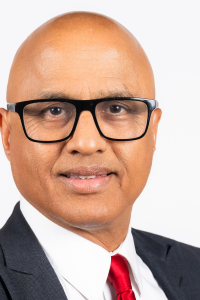
Dr. Arun Lakhotia
Dr. Arun Lakhotia is a Professor in the School of Computing & Informatics at the University of Louisiana at Lafayette, where he holds the Lockheed Martin/BORSF Endowed Professorship in Computer Science and Computer Engineering. His research spans cybersecurity, software engineering, program analysis, and artificial intelligence, with a longstanding focus on understanding software at the binary level. He has led and participated in research funded by the U.S. Department of Defense and other federal agencies, including DARPA’s Cyber Genome program. His research has explored malware analysis, recovering information from compiled programs, identifying code similarity and reuse, and, more recently, the application of artificial intelligence to software development and cybersecurity.
Lakhotia also founded and led Team CajunBot, an interdisciplinary University team that developed autonomous ground vehicles for DARPA’s Grand Challenges in 2004, 2005, and 2007. CajunBot, built on a six-wheeled all-terrain vehicle, was a finalist in the 2005 DARPA Grand Challenge; the team later developed CajunBot II, based on a Jeep Wrangler, for DARPA’s 2007 Urban Challenge. The project brought together faculty, students, engineers, and members of the Lafayette community to develop technologies for autonomous navigation, obstacle detection, path planning, and vehicle control. Technologies developed through CajunBot subsequently contributed to University research on autonomous marine vehicles.
Beyond academia, Lakhotia is a co-founder and Chief Technology Officer of Unknown Cyber, a cybersecurity company that grew out of research conducted at UL Lafayette. The company applies software genomics technology to analyze compiled software, identify shared and novel code, and help organizations assess software supply-chain risk. He also teaches senior-level software engineering, where students work in teams to design and build complete software systems using contemporary development practices and AI-assisted development tools. Across these activities, his work has emphasized translating foundational research into working systems and technologies that address practical problems.